For generations, families across the United States have passed down stories about Native American ancestry. Among the most famous is the claim that an ancestor was related to Pocahontas.
Sometimes the story is vague. Sometimes it appears in old handwritten family trees, genealogy books, or whispered conversations between relatives. In a surprising number of cases, the story specifically names Pocahontas herself. Unlike many legendary ancestral claims, this one is not impossible. Pocahontas was a real historical figure whose descendants are documented through surviving colonial records. Genealogists generally agree that she has tens of thousands, and possibly more than 100,000, living descendants today through her son, Thomas Rolfe.
But there is an important difference between documented genealogy and family mythology. Researching a possible connection to Pocahontas requires historical accuracy, careful sourcing, and respect for the Indigenous communities connected to her story. The real history is far more complicated, and far more interesting, than the legend many people grew up hearing.
Who Was Pocahontas?
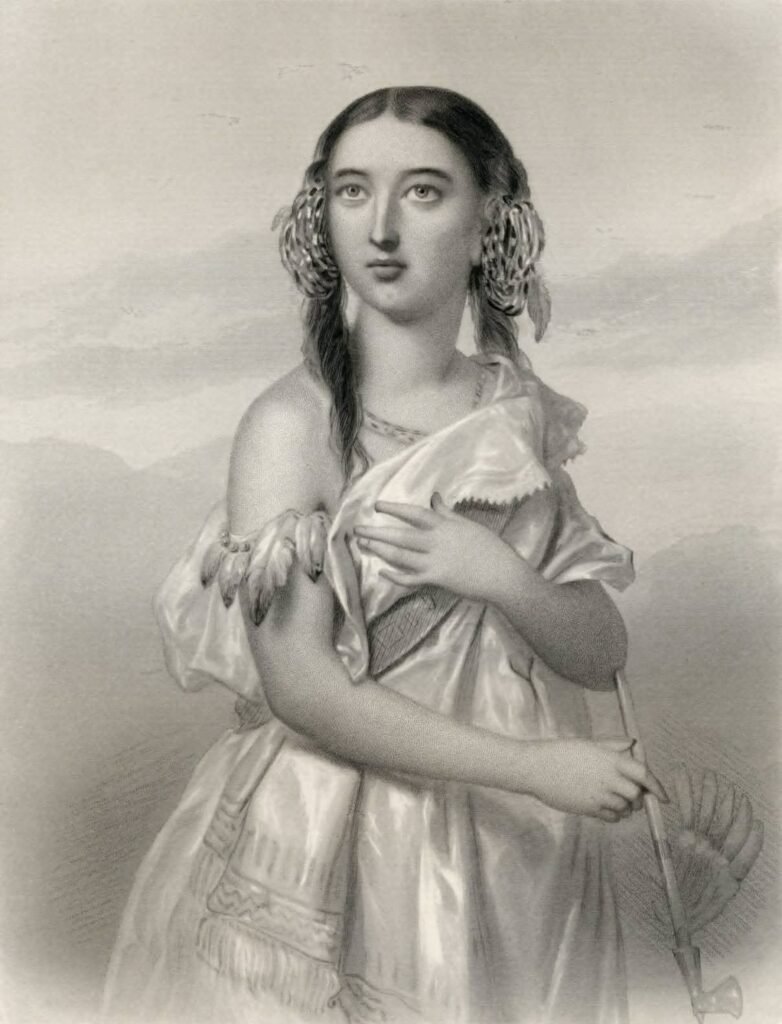
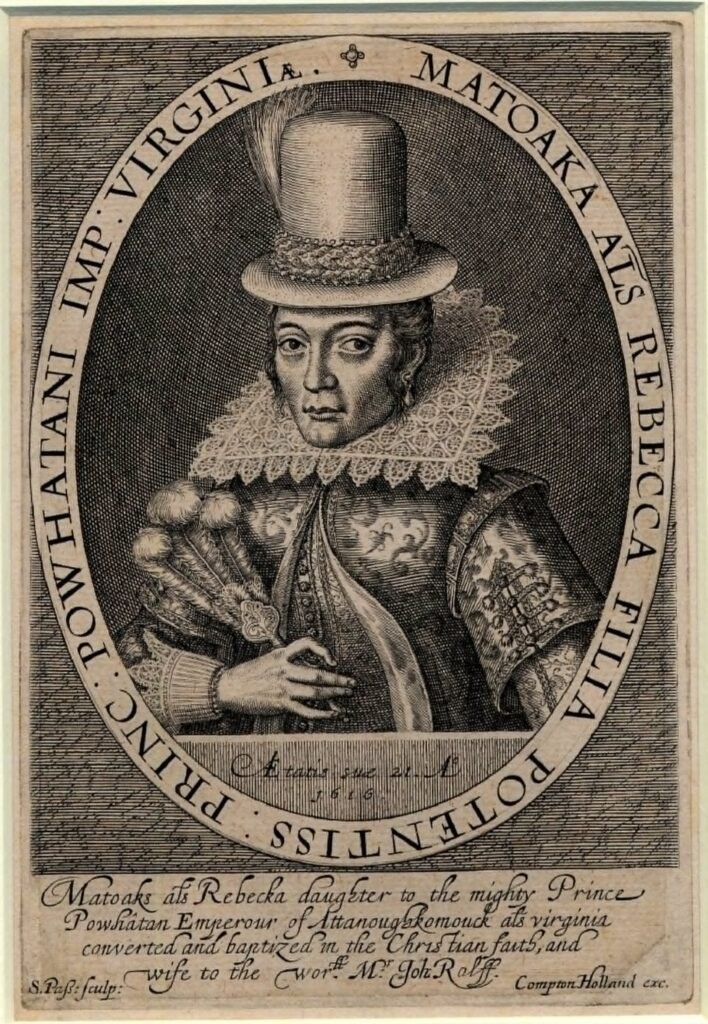
Pocahontas was born in the late 16th century in what is now Virginia. Her personal name is generally believed to have been Matoaka, though she was also known as Amonute. “Pocahontas” was likely a nickname. She was the daughter of Powhatan, the paramount chief of the Powhatan Confederacy, a political alliance of Indigenous communities in the Tidewater region of Virginia.
Much of what the public thinks it knows about Pocahontas comes from later romanticized retellings rather than contemporary historical records. Some stories, including parts of the famous account told by John Smith, are debated by historians. What is well documented is that Pocahontas was caught in the middle of early English colonization efforts in Virginia during a period of political tension, violence, diplomacy, and cultural upheaval.
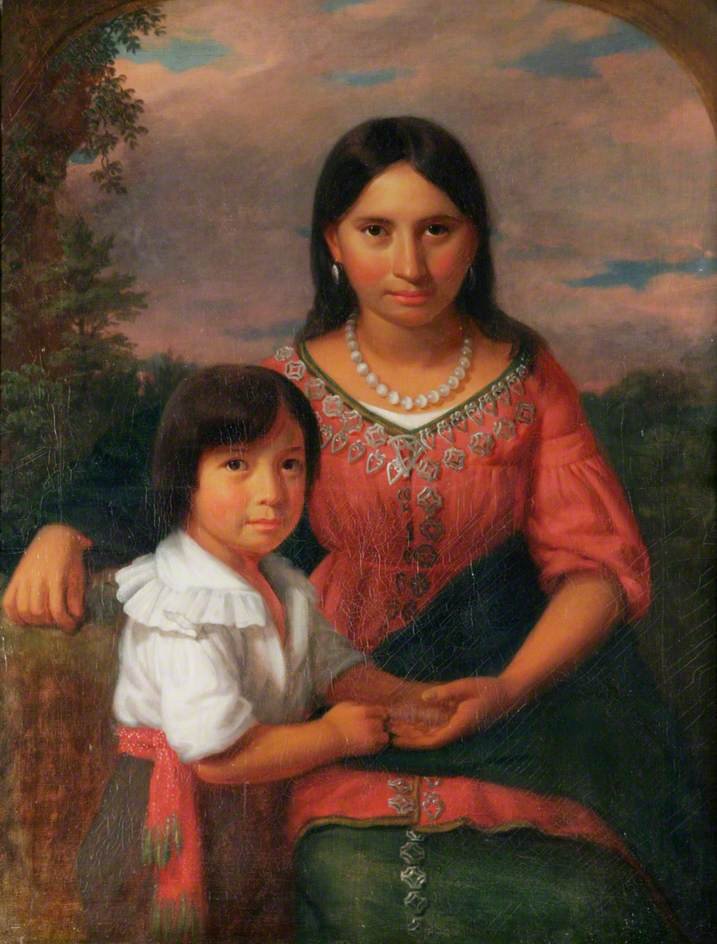
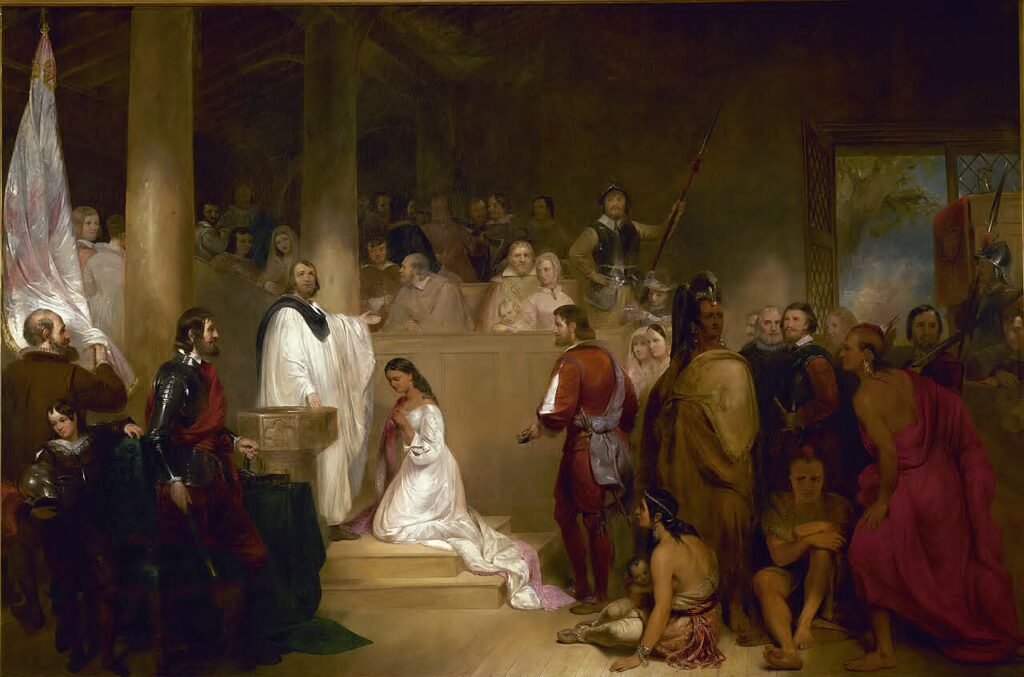
In 1613, she was captured by English colonists during hostilities between the English and Powhatan peoples. During her captivity, she converted to Christianity and was baptized with the name Rebecca. In 1614, she married John Rolfe, an English settler and tobacco planter. The marriage helped create a temporary period of peace between the English colonists and the Powhatan Confederacy. The couple had one son, Thomas Rolfe.
Pocahontas died in England in 1617, likely around the age of 20 or 21.
A Note on Respect and Indigenous Identity
Stories about Native American ancestry can carry deep emotional meaning within families. But they can also involve misunderstandings, inaccuracies, or generations of repeated assumptions. Having a distant Indigenous ancestor does not automatically make someone culturally or politically Native American. Tribal citizenship and identity are determined by living Indigenous nations themselves, often through their own legal and community standards. It is also important to remember that Pocahontas was not simply a symbolic historical figure or a romantic character from popular culture. She was a real Powhatan woman whose life unfolded during a violent and transformative period of colonial expansion.
Diana from Ancestrium
Responsible genealogy means approaching these histories carefully and respectfully, without exaggeration or appropriation.
How Many Descendants Does Pocahontas Have Today?
Genealogists believe that Pocahontas has tens of thousands of living descendants today through her son, Thomas Rolfe.
Exact numbers are impossible to calculate. Over four centuries, even a single ancestral line can branch into an enormous number of descendants. Some genealogical organizations and descendant studies estimate that the number may exceed 100,000 people worldwide. However, not all descendants are documented in published family trees, and not everyone who descends from Pocahontas is aware of the connection.
One important fact makes this lineage easier to trace than many colonial lines: Pocahontas had only one known child who survived to adulthood. That means every verified descendant traces through Thomas Rolfe.
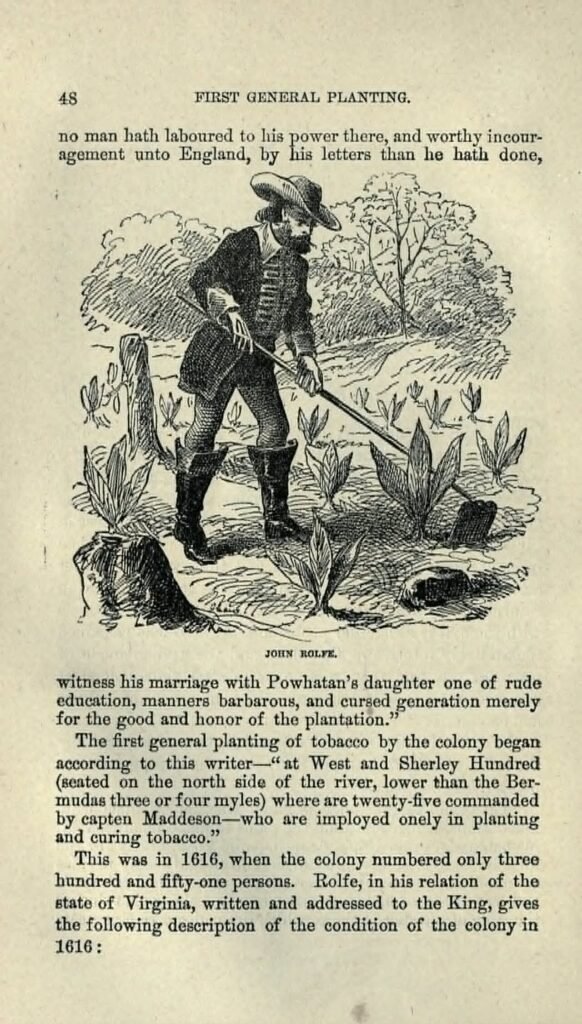
If You Descend From Pocahontas, You Also Descend From John Rolfe
Because Pocahontas and John Rolfe had a son together, every documented descendant of Pocahontas also descends from John Rolfe. Rolfe was not royalty, and he was not a titled nobleman. However, he came from an established English family with connections to the English gentry class. In colonial Virginia, the Rolfe line later became connected through marriage to several socially prominent families. This partly explains why descendants of Pocahontas were carefully documented in early American genealogy. Colonial Virginia’s elite families often preserved family histories, inheritance records, and marriage connections in unusual detail compared to many ordinary colonial families.
Over time, descendants of Thomas Rolfe married into well-known Virginia lineages, including families such as the Bollings, Randolphs, and Flemings. Still, genealogists caution against treating these connections as evidence of “royal blood” or aristocratic status. The historical reality is more nuanced than many family legends suggest.
Why So Many Families Claim Pocahontas Ancestry
Claims of Pocahontas ancestry became especially common in the 18th and 19th centuries among descendants of colonial Virginia families. Part of the reason was simple genealogy. Some families really were connected to the descendants of Thomas Rolfe through documented lines. But cultural factors also played a role. In the 19th century, Americans became increasingly fascinated with lineage, colonial ancestry, and distinguished family connections. A documented link to Pocahontas carried social prestige in some circles, particularly in Virginia society. At the same time, many families developed vague stories about Native ancestry that were never fully researched. Over generations, stories changed, names were forgotten, and assumptions hardened into “facts.” This is one reason genealogists stress documentation over family lore alone.
A family story can be an important clue. But it is only the beginning of research, not the conclusion.
Famous People Who Are Verifiably Descended From Pocahontas
Because the descendants of Pocahontas and John Rolfe became intertwined with several prominent colonial Virginia families, a number of well-known Americans have documented connections to the line. Genealogists generally consider some of these lineages well established, while others remain debated or unsupported. This distinction matters, because Pocahontas ancestry has often been claimed far more broadly than the documentary evidence allows.
One of the best-documented examples is Edith Wilson, wife of President Woodrow Wilson. Through the Bolling family line, her descent from Pocahontas has been carefully traced and publicly documented for generations.
Other historical figures frequently associated with documented or well-supported descent include:
- Thomas Jefferson
- Robert E. Lee
- Martha Washington
These connections usually pass through the descendants of Thomas Rolfe’s daughter Jane Rolfe and her husband Robert Bolling, whose descendants spread into numerous old Virginia families.

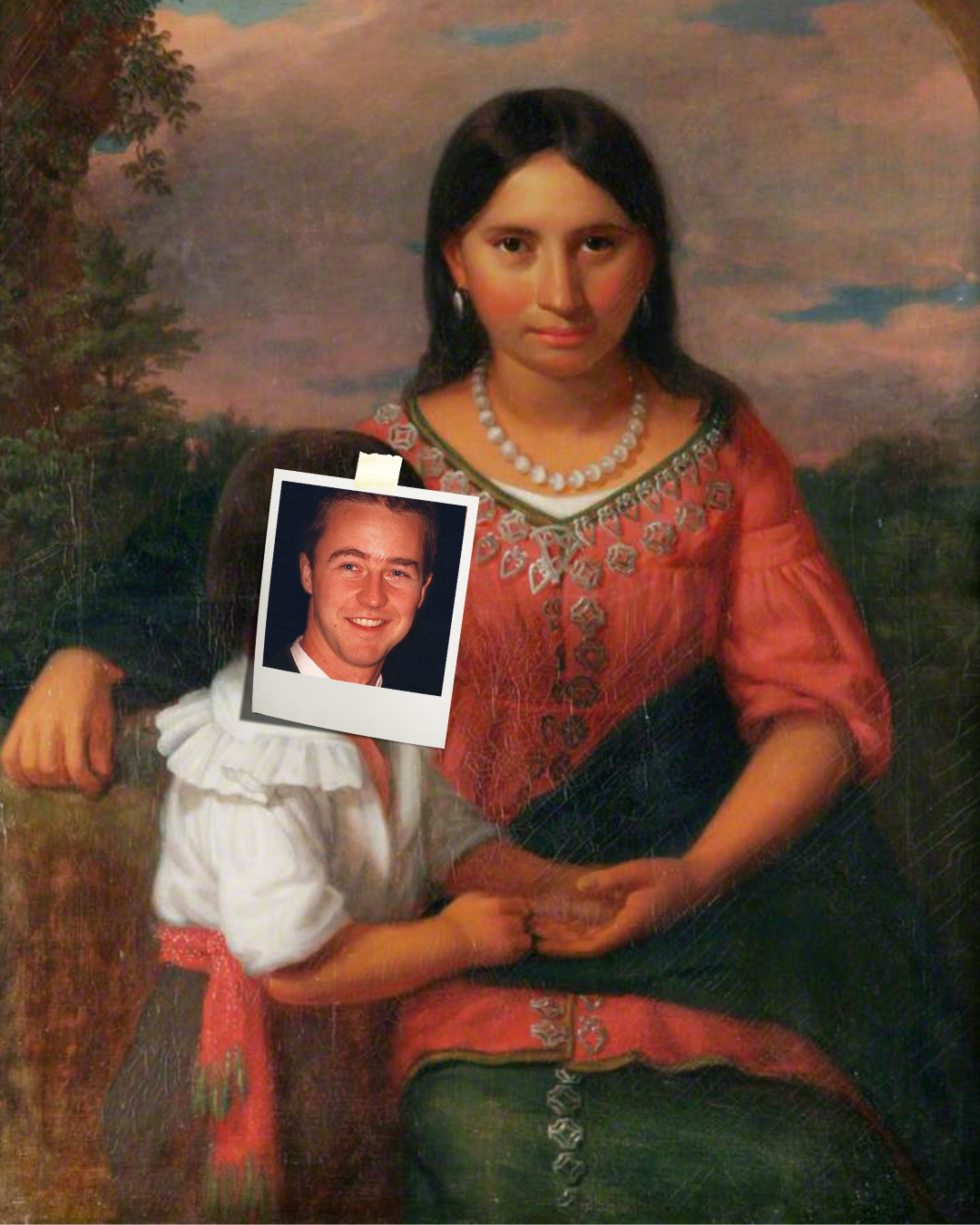
Modern public figures have also discovered verified connections. In 2023, actor Edward Norton learned through genealogical research featured on PBS television series “Finding Your Roots” that he descends from Pocahontas through the Bolling line. At the same time, genealogists caution that not every famous Pocahontas claim is accurate. For example, claims that Nancy Reagan descended from Pocahontas remain disputed and are not universally accepted by researchers.
That uncertainty is an important reminder of how genealogy works at this distance in time. Even in famous families, claims must still be supported by records, documented relationships, and careful historical research rather than repetition alone.
The Real Pocahontas vs the Popular Legend
Modern portrayals of Pocahontas often blur the line between history and fiction. The best-known example is Disney’s Pocahontas, which introduced millions of people to a heavily romanticized version of her life.
The historical Pocahontas was likely much younger than many portrayals suggest during her earliest interactions with English colonists. Historians also emphasize that the relationship between the Powhatan peoples and English settlers involved conflict, land seizure, diplomacy, and coercion, not simply romance and cultural harmony. Even the label “princess,” often attached to Pocahontas, reflects an English interpretation rather than a direct equivalent within Powhatan political structures. Understanding these distinctions matters because genealogy does not exist separately from history. Researching an ancestor responsibly also means understanding the historical realities that shaped their lives.
How to Research a Possible Connection to Pocahontas
If your family has a story about descending from Pocahontas, the best approach is methodical research.
1- Start With Yourself and Work Backward
Professional genealogists strongly recommend building your family tree one generation at a time starting from you. Do not jump directly to famous historical figures. Instead:
- verify your parents’ birth, marriage, death certificates, marriage records and locations
- do the same for grandparents
- and great-grandparents
- and so on. The further back you research, the easier it becomes to make accidental assumptions. Treat distant ancestors with the same level of caution and documentation as recent relatives. The purpose of genealogy is to verify relationships, not invent them.
Besides birth certificates and marriage record, use records to verify locations and dates with documents such as:
- wills
- census records
- family bibles
- church registers
- probate documents
- land registries
Every generation should be supported by evidence.
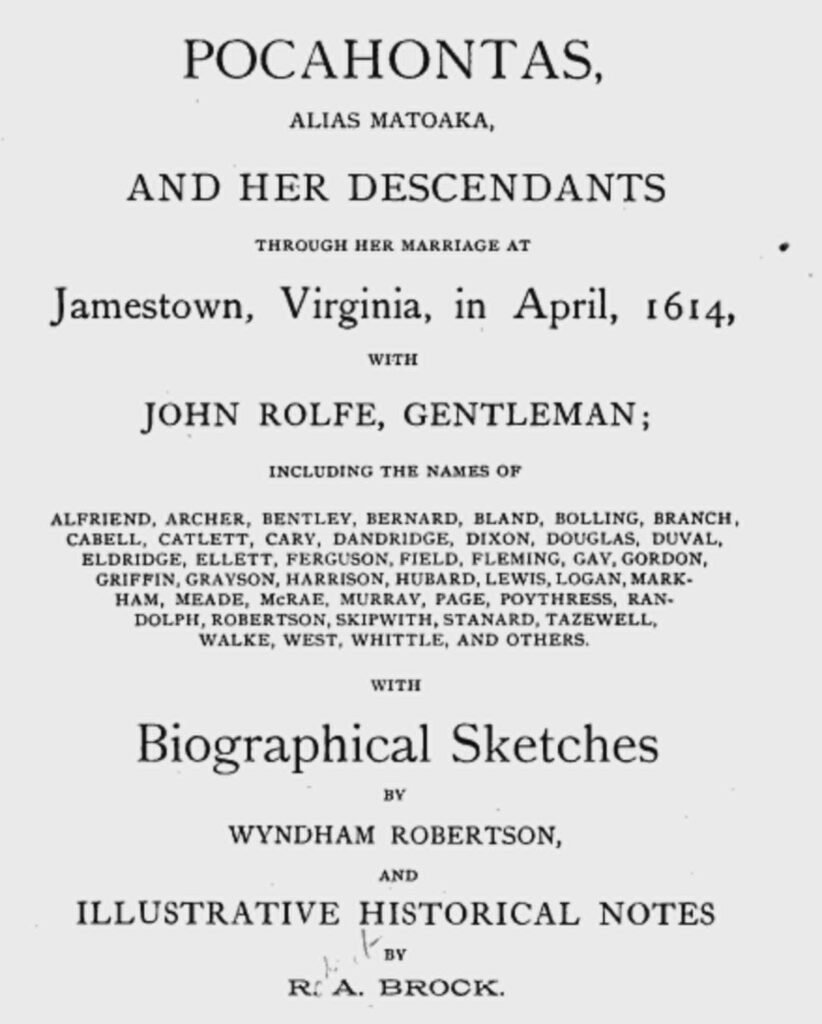
One of the most influential modern works on the subject is Pocahontas’ Descendants, a multi-volume genealogical reference compiled by Stuart E. Brown Jr. and his colleagues at the Pocahontas Foundation. Expanding on earlier 19th-century research, the work attempted to systematically document descendants of Pocahontas and John Rolfe through the Bolling family lines and related Virginia families. Today, it remains an important reference point for genealogists researching verified Pocahontas descent, although, like all genealogy, its conclusions are still subject to ongoing corrections and documentary review.
2- Look for Connections to Colonial Virginia Families
Most documented descendants of Pocahontas trace through established colonial Virginia lines. Some surnames frequently associated with descendants include:
- Bolling
- Fleming
- Randolph
- Murray
- Eldridge
- Branch
But a surname alone proves nothing. These families had many unrelated branches, and many people share the same last names without any connection to Pocahontas. However- if you manage to trace your family tree back 8-12 generations in Virginia and the above mentioned families pop-up, there is a slight chance you might indeed be a descendant of Pocahontas!
3- Find Established Colonial Virginia Roots
This is still the biggest one. Verified descendants almost always connect to families living in colonial Virginia relatively early in the tree, especially in:
- Tidewater Virginia
- plantation regions along the James River
- counties tied to early English settlement
A family that arrived in America much later, or settled entirely outside colonial Virginia, is statistically less likely to connect to the Rolfe line.
4- Recognise Migration Patterns
Some descendant families later migrated:
- into the American South
- Kentucky
- Tennessee
- the Carolinas
- and later westward
So a Southern family with deep colonial Virginia roots may be more likely to connect than a family with entirely recent immigrant ancestry. But again, this is only contextual, never proof.
5- Be Careful With Online Family Trees
One of the biggest problems in modern genealogy is copied misinformation. Online trees often repeat unsourced claims from older family histories or other internet users. Once an error spreads widely enough, it can begin to look legitimate simply because it appears everywhere.
Experienced genealogists look for:
- primary records
- citations
- documented parent-child relationships
- chronological consistency
A beautiful family tree without sources is not evidence.
6- Can DNA Prove Pocahontas Ancestry?
Not directly.
There is currently no verified DNA reference sample from Pocahontas herself that could confirm descent through genetic testing alone. DNA tests may sometimes support broader family connections or colonial ancestry patterns, but they cannot independently prove that someone descends from Pocahontas. For this reason, documentary genealogy remains the primary method for verifying such claims.
Why the Story Still Fascinates People
More than four centuries after her death, Pocahontas remains one of the most recognizable figures from early American history.
Part of that fascination comes from the collision of myth and reality. Her story touches on colonization, diplomacy, family memory, identity, and the way societies reshape historical figures over time. For genealogists, the appeal is also deeply personal. A possible connection to a famous historical figure can make the distant past feel suddenly tangible. But whether a family story turns out to be true or not, the research itself often reveals something meaningful. Sometimes the real discovery is not a famous ancestor, but the understanding of how families preserve memory across generations, imperfectly but persistently.
And in the case of Pocahontas, separating historical fact from legend may be the most important part of the journey.